
Best retirement plans, you say? Saving for retirement is not a one-size-fits-all proposition. Whether you use an IRA, a 401(k), one of the many other options or a combination of several plans, the best retirement plans for you depends on your employment status and how much you’re able to contribute.
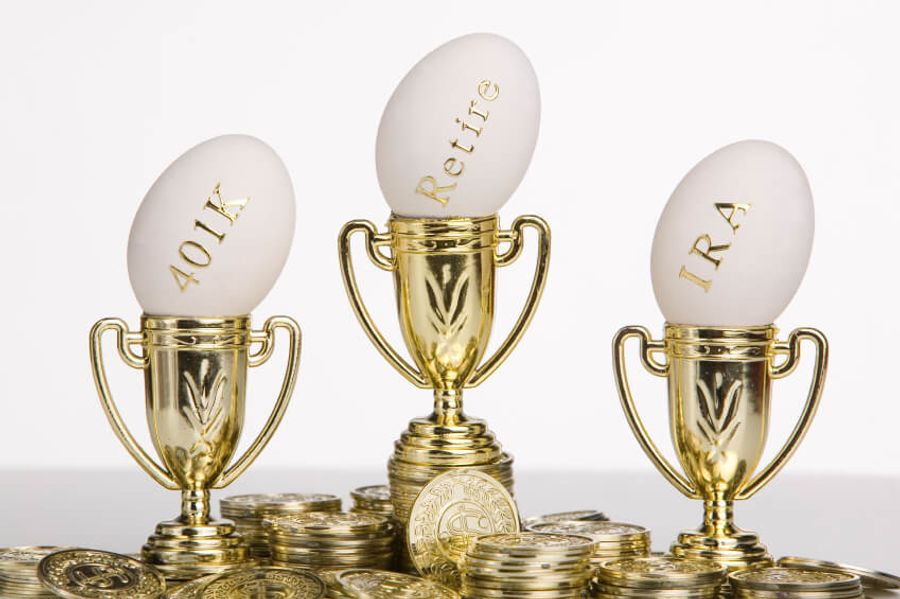
Best Retirement Plans
Sometimes when we talk about the best retirement plans we are referring to the various accounts used for saving money for retirement. Other times we are talking about all the various issues related to having a secure retirement – knowing how much you will need, what to do about Social Security, housing, budgets, and more.
If you need the best retirement plan – a detailed strategy for figuring out the financial details of your life after retirement – then you might want to use the Boldin retirement calculator. This tool was named a best retirement calculator by the American Association of Individual Investors (AAII).
If you are trying to figure out which kind of 401(k) or IRA is best for you, keep reading.
Best Retirement Plans Regardless of Employment Status
Individual Retirement Account (IRA)
An IRA is basically a savings account with big tax breaks, allowing you to sock away cash that grows tax-free. For 2020, you can contribute up to $6,000 to an IRA. The catch-up contribution for people 50 or older is $1,000 per year, so you can save up to $7,000 with tax advantages.
You can often deduct the amount you contribute to an IRA on your federal income tax return. If a retirement plan at work covers you, the deductible amount depends on your filing status and your Modified Adjusted Gross Income (MAGI). The IRS provides a table that shows whether your deduction faces limits. If no workplace retirement plan covers you, you can take the full deduction.
If you make an IRA contribution that is not deductible, you’ll still get a tax benefit eventually. Non-deductible contributions can be withdrawn tax-free in retirement. You’ll keep track of the non-deductible contributions on Form 8606 of your individual tax return.
Roth IRA
A Roth IRA works like a traditional IRA, but you get the tax benefits when you withdraw the money instead of when you contribute it. You never deduct Roth IRA contributions, yet both contributions and earnings come out tax-free in retirement. That’s a strong advantage if you expect a higher tax bracket later.
You can contribute up to $6,000 for 2020, or $7,000 if you’re age 50 or older.
Your modified adjusted gross income (MAGI) also limits contributions. For married couples filing jointly, your MAGI must fall below $203,000 in 2019 and below $206,000 in 2020.
Best Retirement Plans for the Employed
Pensions
Pensions are a great vehicle for retirement saving – if you can get one. Previous generations tended to stay with the same company for many years – perhaps even their entire career. In exchange, their employers provided for their retirement years with pensions, a guaranteed amount of monthly income from retirement until death. Unlike a 401(k) plan, the income you’ll receive in retirement from a pension is not affected by the performance of the stock market. All investment risk is on the plan provider.
Today, company-sponsored pension plans are practically unheard of. Pensions are both more expensive and riskier to employers than a 401(k) plan.
401(k)
Employees primarily fund a 401(k) plan through pre-tax payroll deductions. You can usually invest your contributions in stocks, bonds, mutual funds, or ETFs, depending on the options your employer offers. Like IRAs, the investments inside a 401(k) grow tax-free, but you pay taxes when you withdraw the money in retirement.
There are two features of 401(k) plans that make them a better option for retirement savings than IRAs. First, contribution limits for 401(k) plans are higher. For 2020, you can contribute up to $19,500 to a 401(k) plan, with an additional “catch-up” contribution limit of $6,500 if you’re age 50 or older.
Second, many employers offer matching contributions, which equals “free money” for plan participants. If your employer offers matching contributions, make sure you’re at least contributing enough to get the full match, otherwise you’re not taking full advantage of your total compensation package.
Some employers also offer Roth 401(k) options. If you opt for the Roth version, your contributions will be made with after-tax dollars and won’t be taxed upon withdrawal.
403(b)
403(b) plans are similar to 401(k)s in that they allow employees to make pre-tax contributions into a retirement plan, but they’re only available for employees at a church, school, hospital, or other non-profit organization.
While contribution limits are the same as 401(k) plans, investments in the plan are limited to annuities and mutual funds. For a more in-depth look at 403(b) plans, check out this article.
SIMPLE IRA
Employers, including self-employed individuals, can establish a SIMPLE IRA as a retirement plan. Employees make pre-tax contributions, and they pay taxes when they withdraw the money in retirement.
If your employer offers a SIMPLE IRA, they must either match your contributions or make nonelective contributions. Nonelective contributions go to every eligible employee, whether that employee contributed or not.
SIMPLE IRAs are usually the plan of choice for small employers since they are easier to administer.
Like a 401(k), employees can make pre-tax contributions to a SIMPLE IRA, but the contribution limits are lower. For 2020, employees can contribute $13,500 to a SIMPLE IRA, and after age 50 can contribute an additional $3,000 per year in catch up contributions.
Best Retirement Plans for Small Business Owners
SEP IRA
A Simplified Employee Pension (SEP) IRA allows a business owner to make tax-deductible contributions on behalf of eligible employees, including the business owner. A SEP is available to employers of any size and allows for contributions of up to 25% of each employee’s pay, up to a limit of $57,000 for 2020.
They are generally easy to establish and involve very little paperwork, but only the employer can contribute to the SEP. Employees are not able to make pre-tax contributions. For sole-proprietors, this is not an issue, but business owners with employees may want to consider a 401(k) plan in order to allow employees to contribute.
Solo 401(k)
A solo 401(k), also known as an individual 401(k), is very similar to a traditional 401(k) plan, but it’s strictly for sole proprietors who have no employees (other than a spouse that works for the business). Like a traditional 401(k), a solo 401(k) can come in both traditional and Roth versions.
Solo 401(k)s are ideal if you want to sock away large sums of money since you can save for retirement both as an employer and as an employee. As an employee, you can contribute the standard 401(k) contribution limit of $19,500 in 2020, or $26,000 in 2020 if age 50 or over. As your own employer, you can contribute an additional 25% of compensation, up to a maximum of $57,000 including your employee contributions.
Since these amounts are discretionary, you can save the maximum in profitable years and reduce or even eliminate contributions in leaner years.
The downside to a solo 401(k) is the amount of administration required. Solo 401(k) plans require more paperwork than SEP IRAs and if your account balance exceeds a certain amount, you’ll have to file a separate tax return for the plan, which can increase your tax preparation costs. A solo 401(k) also comes with setup charges and annual fees, so they’re more expensive than a SEP IRA.
Defined Benefit Plan
A defined benefit plan is essentially a pension because it allows for a predetermined benefit at retirement regardless of market fluctuations. While large-employer pensions are all but extinct, some self-employed and small business owners choose to start defined benefit plans in order to save aggressively for retirement while realizing significant tax benefits.
A defined benefit plan is funded with employer contributions only and must be funded annually. Annual contributions are calculated based on several factors, including age, compensation, and retirement age. If you have employees, you must contribute for all eligible employees. Contributions are 100% tax-deductible and earnings grow tax-free but are taxable when withdrawn.
Defined benefit plans work best for self-employed people age 50 or older who can make annual contributions of $80,000 or more for at least five years and have few, if any, employees. The plan takes a while to set up and must be established by the end of your business’ fiscal year (usually December 31).
While defined contribution plans have some of the highest contribution limits, there are also substantial costs and administrative requirements based on the terms of your plan, including annual actuarial calculations, required annual funding, and filing fees for IRS Form 5500.
The Bottom Line
There are advantages and disadvantages to any type of retirement account. The best one for you will depend on what’s available and how much you are able to save, so make sure you consider the pros and cons of each before making a decision. Whichever you choose, the most important step in planning for retirement is to make a plan and start saving today.
Choosing The Best Retirement Plans That Fit Your Life
Exploring the best retirement plans isn’t about following a template—it’s about matching options to your work situation, goals, and flexibility needs. Whether you’re considering IRAs, essential employer plans like 401(k)s and SIMPLE IRAs, or advanced strategies like solo 401(k)s or defined benefit plans, your best choice depends on timing, tax trade-offs, and growth potential. Use the Boldin Retirement Calculator to compare how each plan layer fits into your unique path—from employer match to tax strategy. Your best retirement plan is the one you start—and stick with—with confidence.
FAQs: Best Retirement Plans
What makes an IRA a smart retirement plan for individuals
IRAs offer tax advantages and investment freedom, ideal after securing employer match and building an emergency fund. The Boldin Savings Playbook suggests IRAs as the third layer. Use the Planner to model traditional vs. Roth benefit trade-offs in your long-term plan.
Why do 401(k) and SIMPLE IRA matter for the employed
These employer plans deliver higher contribution limits and matches—essential “free money.” Following the savings sequence, capturing your employer match first strengthens your foundation. The Boldin Planner shows how maximizing these boosts your compounding power and stays aligned with overall strategy.
Are solo 401(k)s or SEP IRAs better for small business owners
Solo 401(k)s offer high contribution potential and flexibility; SEP IRAs are easier to administer. Which suits you depends on income variability, administrative capacity, and future growth. The Planner helps you model contribution trade-offs and administrative cost impact confidently.
When do defined benefit plans make sense in retirement saving
Defined benefit plans offer large, tax-deductible contributions—sometimes over $80,000 annually—but they work best for older business owners with no (or few) employees and the discipline to fund consistently. The Boldin Planner lets you evaluate whether the cost and complexity align with your savings goals and timeline.
How can I compare retirement plans to find the best one for me
The best plan depends on income level, employer options, tax strategy, and flexibility. The Boldin Retirement Calculator and Savings Playbook help you layer plans—starting with employer match, then IRAs, then advanced owner plans—so you keep growing and adapting over time.